

Short version: every slowpitch bat is 34 inches, so the decisions are different from baseball. Choose in this order: the stamp your league requires, the weight, balanced or end-loaded, then barrel length and construction. Get the stamp wrong and nothing else matters, because the umpire will pull the bat.
Last reviewed September 2026. Association rules change; confirm with your league director before you buy.
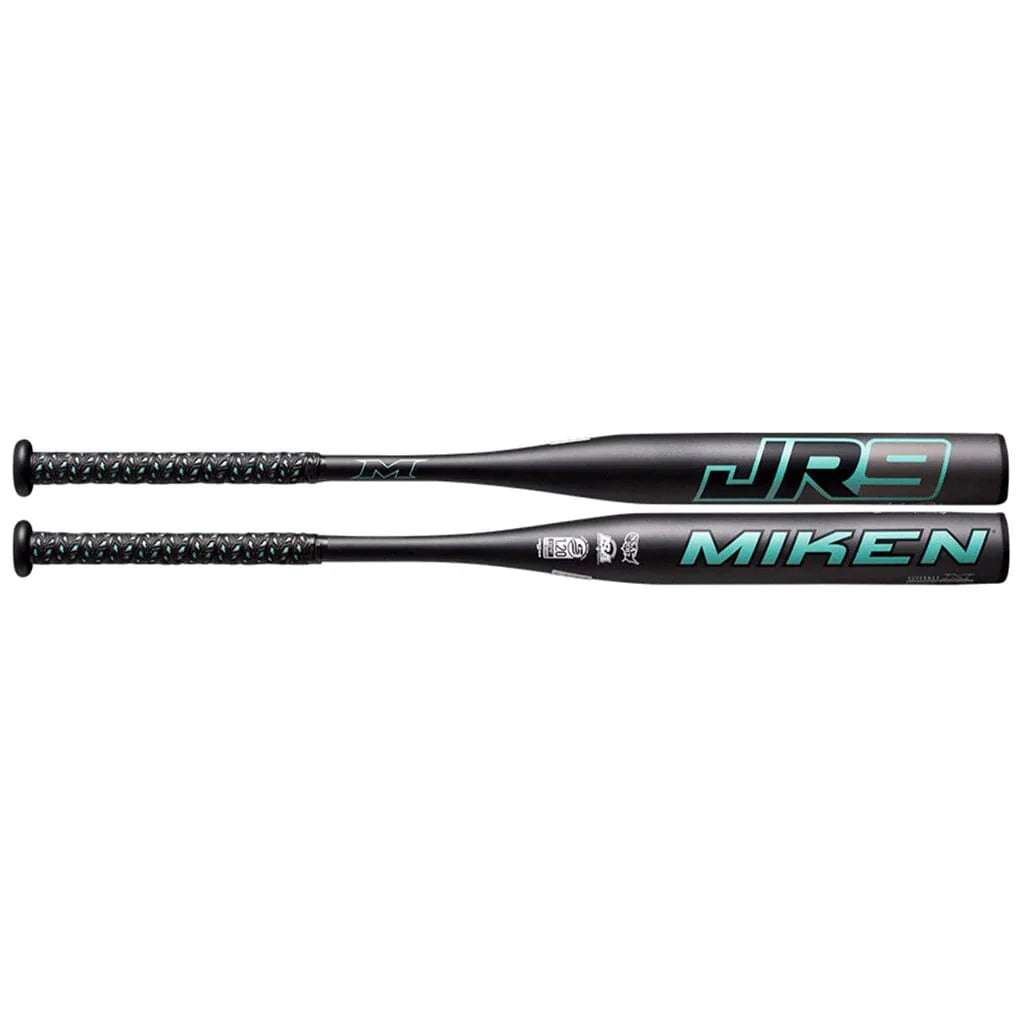
Slowpitch has more sanctioning bodies than any other bat category, and the same model is often sold in two or three versions. The stamps are printed on the taper above the grip.
| Stamp | Where it's used | Performance | What to know |
|---|---|---|---|
| USSSA 240 (NTS) | USSSA, GSL, most weekend tournaments and competitive leagues | Hottest standard outside senior ball | The current USSSA mark. The older "thumbprint" stamp has not been legal in USSSA tournament play since January 1, 2023, though some local leagues still allow it. |
| USA Softball (ASA) | USA Softball leagues, many city, church, rec and military leagues | Lower by rule (98 mph limit) | ASA and USA Softball are the same program. Older ASA-stamped bats are still legal as long as they're on the approved list and not on the non-approved list. |
| NSA / ISA | NSA and ISA leagues and tournaments | Close to USSSA | Many USSSA bats also carry NSA and ISA stamps. Check the bat for all the marks you need. |
| SSUSA 1.21 BPF (Senior) | Senior associations only, generally men 50+ and women 40+ | Hottest bats made | Not legal in any USSSA, USA, NSA or ISA play. No exceptions. |
| Dual stamp (USA + USSSA) | Players in both kinds of leagues | Built to the lower USA limit | Legal nearly everywhere, but you give up performance in USSSA games. |
The one-way rule: a USA/ASA bat can be swung in a USSSA game. A USSSA bat cannot be swung in a USA/ASA game. If you play in both and only want one bat, buy the USA or dual-stamp version. If you're serious about both, buy two.
Some rec leagues add their own restrictions, such as single-wall alloy only, wood only, or a published banned-bat list. Ask before you spend $350.
Shop all slowpitch bats or senior softball bats. For more on the marks themselves, see our ASA/USA stamp guide.
Slowpitch bats run from 25 to 30 ounces. Because the pitch arrives slowly, all of the ball's exit speed comes from you, so bat speed beats bat mass for most hitters.
| Weight | Typical hitter |
|---|---|
| 25–26 oz | Most women, smaller or newer players, place hitters, anyone who wants maximum bat control |
| 26–27 oz | Most men. The best-selling weights by a wide margin, and the right default if you're unsure. |
| 28 oz | Strong hitters with a proven swing who want more mass behind the ball |
| 29–30 oz | Big, strong power hitters. Rare, and fewer models are made in these weights. |
If you're late on pitches, pulling everything foul, or your hands drop during the swing, the bat is too heavy. If you're between two weights, go lighter. An extra ounce only helps if you can swing it just as fast.
A useful rule: an end-loaded bat swings about an ounce heavier than its listed weight. If you swing a 27 oz balanced bat comfortably, try a 26 oz end-load before a 27.
| Choice | Options | What it changes |
|---|---|---|
| Barrel length | 12" to 14" | Longer barrels (13.5–14") give a bigger hitting area and more forgiveness. Shorter barrels (12–12.5") concentrate the sweet spot and usually feel stiffer and more end-heavy. |
| Pieces | One-piece or two-piece | One-piece is stiff, with more feedback and more sting; power hitters tend to like it. Two-piece flexes at the connection, whips through the zone and takes the sting out of mishits. |
| Material | Composite or alloy | Composite is the performance choice in every stamp. It needs a break-in and shouldn't be used below 60°F. Alloy is cheaper, durable, game-ready, fine in the cold, and required in some single-wall leagues. |
New composite? It takes 200 or more swings with real softballs, rotating the barrel a quarter turn each hit. Read how to break in a bat first, and never use cage balls.
The ball your league uses changes how a bat plays and how long it lasts. USA Softball leagues generally play a 52 COR / 300 compression ball. USSSA plays its Classic M. Senior associations play a 44 COR / 375 compression ball. Harder balls are tougher on composite barrels, especially in cold weather. Practice and break in with what you play. Shop slowpitch softballs.
Senior 1.21 BPF bats have thinner, more flexible walls. They are noticeably hotter, they break in faster, and they are less durable, particularly in the cold or against hard balls. They're built for senior play and only senior play. If you're eligible, see Miken, Dudley and Easton senior bats, or the full senior collection.
They are built to different performance limits. USA Softball caps batted ball speed at 98 mph, so USA/ASA bats are less lively by rule. USSSA bats carry the 240 NTS stamp and are hotter. A USA bat is legal in USSSA play, but a USSSA bat is not legal in USA Softball play.
Most men swing 26 or 27 ounces and most women swing 25 or 26. Choose the heaviest bat you can swing without losing bat speed. If you're between weights, go lighter.
Balanced bats suit most players and anyone who values control and bat speed. End-loaded bats add mass at the end of the barrel and help strong hitters who already have a fast, compact swing. If you're unsure, buy balanced.
Yes, adult slowpitch bats are 34 inches long with a 2¼-inch barrel. They differ in weight, weight distribution, barrel length and construction.
No. Senior bats are certified to 1.21 BPF for senior associations such as SSUSA and are not legal in USSSA, USA Softball, NSA or ISA play.
Not in USSSA tournament play, where the 240 NTS stamp has been required since January 1, 2023. Some local leagues still allow thumbprint bats, so check with your league director.
Neither is better; they feel different. One-piece bats are stiffer and favored by power hitters. Two-piece bats flex more, feel smoother and reduce hand sting on mishits.
Direct Sports has been selling slowpitch bats from Pearisburg, Virginia since 1988. Tell us your league, your current bat and what you'd change about it, and we'll narrow it to two or three. Email us, or start at Slowpitch HQ for bats, balls and gloves.